
Printing accuracy has become a defining factor in how products are perceived, especially in competitive packaging markets where even minor detail differences can influence customer decisions and brand trust.
When it comes to photopolymer plates, their role in delivering clean, consistent impressions has grown steadily across industries that rely on high-speed and high-quality production output.
This article breaks down two essential print techniques in a structured and reliable way, helping you understand their purpose, strengths, and where each method fits best in real-world applications.
Understanding the Role of Plate-Based Printing
Plate-based printing remains a cornerstone in industrial printing due to its repeatability and precision. It allows manufacturers to maintain consistency across large volumes without compromising on detail.
The use of photopolymer plates has simplified the preparation process compared to older metal alternatives. These plates are lightweight, flexible, and capable of holding fine image details. As a result, they are widely used in flexible packaging, labels, and corrugated printing where speed and clarity must align without frequent adjustments.
Key Benefits of Using Photopolymer Materials
One of the main advantages of photopolymer materials lies in their adaptability. They can be customised for different substrates and ink systems, making them suitable for diverse production environments.
Notable benefits include:
- High-resolution image reproduction
- Faster plate-making process
- Reduced material waste during setup
- Compatibility with modern automated systems
These features contribute to operational efficiency while maintaining quality standards expected in commercial printing sectors.
Applications Across Packaging Industries
Modern packaging demands both visual appeal and durability. Photopolymer plates support this by ensuring designs remain sharp even under high-speed production conditions.
They are commonly used in food packaging, pharmaceutical labels, and retail branding materials. Their ability to handle fine text and intricate graphics makes them ideal for compliance-heavy industries where readability is critical.
This technology also supports sustainable practices, as many plate systems now require less chemical processing compared to traditional methods.
Introduction to Decorative Print Finishing
While structural printing focuses on clarity, decorative finishing enhances visual appeal. This is where foil printing becomes an essential technique.
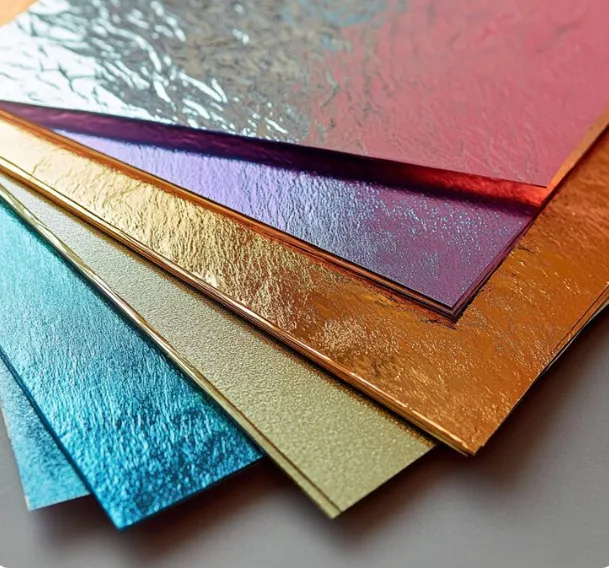
It is widely used to create metallic or pigmented highlights on packaging and printed materials. The process involves transferring foil onto a surface using heat and pressure, resulting in a reflective and premium finish that immediately captures attention.
Advantages of Foil-Based Enhancements
Foil printing adds a tactile and visual layer that standard inks cannot replicate. It elevates packaging, making products appear more refined and high-end.
Key advantages include:
- Strong visual contrast with matte or textured surfaces
- Resistance to fading over time
- Ability to highlight logos and key information
- Compatibility with various materials including paper and board
These qualities make it particularly valuable in luxury packaging and branding strategies.
Common Use Cases in Branding and Design
Brands often rely on foil printing to distinguish their products in crowded markets. It is frequently used on cosmetic boxes, invitation cards, book covers, and premium labels.
The reflective finish naturally draws the eye, helping key design elements stand out without overwhelming the overall layout. When used strategically, it enhances perceived value without requiring complex design changes, making it a practical addition to many print projects.
Choosing the Right Method for Your Needs
Selecting between structural and decorative techniques depends on the purpose of the print job. Functional clarity and durability often guide the use of plate-based methods, while visual enhancement drives finishing techniques.
In many cases, both methods are combined to achieve a balanced result. For example, detailed imagery may be produced using plate systems, while selected elements are highlighted through foil application to create contrast and depth.
Final Thoughts on Modern Print Solutions
Both plate-based precision and decorative finishing play distinct yet complementary roles in today’s printing landscape. While one ensures consistent image quality, the other enhances visual impact and perceived value.
Understanding how photopolymer-based systems support accurate reproduction, alongside how foil-based finishes improve presentation, allows better decision-making for print projects.
By aligning technical needs with design goals, you can achieve results that are both functional and visually engaging. Consider these approaches carefully to create print work that truly stands out.