
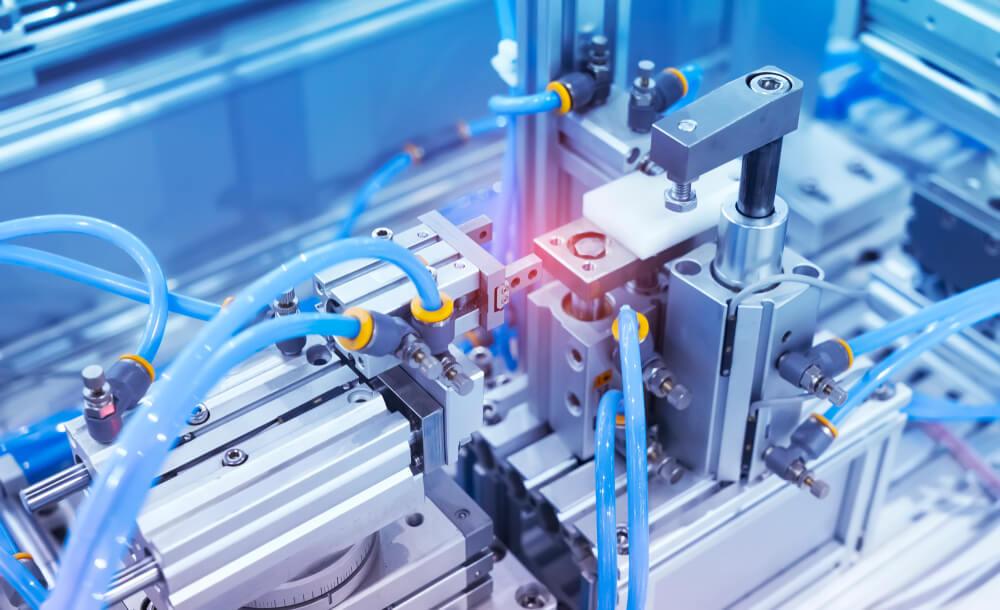
Robotics and automation are transforming modern manufacturing, enabling companies to increase productivity, improve precision, and reduce labour-intensive tasks. Behind many automated processes is a less visible but essential technology: compressed air. Often referred to as the “fourth utility” in industry—alongside electricity, water, and gas—compressed air powers a wide range of machinery used in robotics and automated production systems.
From robotic arms assembling car parts to packaging robots sorting products at high speed, compressed air plays a vital role in delivering motion, control, and efficiency across industrial environments.
Understanding Compressed Air in Automation
Compressed air systems store energy in the form of pressurised air and release it to perform mechanical work. In industrial automation, this energy is typically delivered through pneumatic systems made up of compressors, storage tanks, valves, and actuators.
These components work together to convert air pressure into movement. Pneumatic actuators—such as cylinders or rotary motors—transform compressed air into linear or rotational motion, enabling machines and robotic systems to perform tasks like lifting, gripping, pushing, and positioning components.
Because compressed air systems are simple, reliable, and relatively inexpensive, they are widely used in automated environments where repetitive tasks must be performed quickly and consistently.
Pneumatics in Robotic Systems
Many robotic systems rely on pneumatic components to carry out precise actions. One of the most common examples is the pneumatic gripper used in pick-and-place robots. These devices use compressed air to open and close gripping jaws that hold and release objects during assembly or packaging processes.
In manufacturing environments, robots equipped with pneumatic actuators perform tasks such as:
• Handling materials on conveyor systems
• Loading and unloading machine tools
• Sorting and packaging products
• Operating valves or clamps in assembly lines
The fast response time of pneumatic systems allows robots to operate at high speeds while maintaining consistent performance. This is especially useful in industries like electronics manufacturing, automotive assembly, and food packaging where thousands of repetitive actions occur every hour.
Another advantage is durability. Pneumatic systems typically have fewer moving parts than hydraulic alternatives, making them easier to maintain and well suited to harsh industrial environments.
Advantages of Compressed Air in Automation
Compressed air provides several benefits that make it ideal for robotics and automation:
1. Speed and Responsiveness
Pneumatic systems react quickly to control signals, allowing robots to complete rapid movements and high-cycle operations.
2. Reliability
Compressed air systems are robust and perform consistently in demanding industrial settings.
3. Safety
Unlike hydraulic systems that use fluids, pneumatic systems rely on air, reducing the risk of contamination in sensitive environments such as food or pharmaceutical production.
4. Cost-Effectiveness
Compressed air components are relatively simple and affordable compared to many electric or hydraulic systems.
Because of these advantages, compressed air remains a key power source for automation systems in factories around the world.
The Role of Plant Engineering
While compressed air may seem straightforward, designing and managing a compressed air network in a modern factory requires careful planning. This is where plant engineering becomes critical.
Plant engineering focuses on designing, installing, and maintaining the technical infrastructure that supports industrial operations. This includes utilities such as compressed air systems, piping networks, production equipment, and automation technology. Industrial plants consist of many interconnected systems that must operate together efficiently to support manufacturing processes.
Effective plant engineering ensures that compressed air is delivered at the correct pressure, volume, and quality required by robotic and automated equipment. Poor system design can lead to pressure drops, energy waste, and reduced machine performance.
Engineers must also consider factors such as energy efficiency, air treatment, filtration, and system monitoring when designing compressed air networks. For businesses planning new automation projects, working with specialists in plant engineering can help ensure that compressed air systems are properly integrated into the wider manufacturing environment.
Compressed Air and the Smart Factory
As factories become more digitally connected, compressed air systems are increasingly integrated into smart manufacturing environments. Sensors and monitoring tools can track airflow, pressure, and energy consumption in real time, allowing engineers to optimise performance and detect problems before they cause downtime.
These intelligent systems help manufacturers reduce energy costs and maintain consistent air supply for robotic equipment. Predictive maintenance tools can also identify leaks or failing components, ensuring that automation systems remain reliable and efficient.
In Industry 4.0 environments, compressed air systems are often linked with broader automation platforms that control production lines, track machine performance, and coordinate robotic processes across entire facilities.
The Future of Pneumatics in Robotics
Although electric actuators are becoming more common in high-precision robotics, pneumatic technology continues to evolve and remain highly relevant. Innovations such as soft robotics, collaborative robots, and advanced vacuum gripping systems rely heavily on pneumatic principles to create flexible and safe robotic movements.
In many cases, compressed air provides the best combination of speed, durability, and affordability for industrial automation tasks. As manufacturing continues to adopt robotics and automated systems, the demand for efficient compressed air infrastructure will only grow.
Conclusion
Compressed air is a foundational technology in modern robotics and automation. By powering pneumatic actuators, grippers, and control systems, it enables robots to perform fast, reliable, and repetitive tasks across manufacturing environments.