
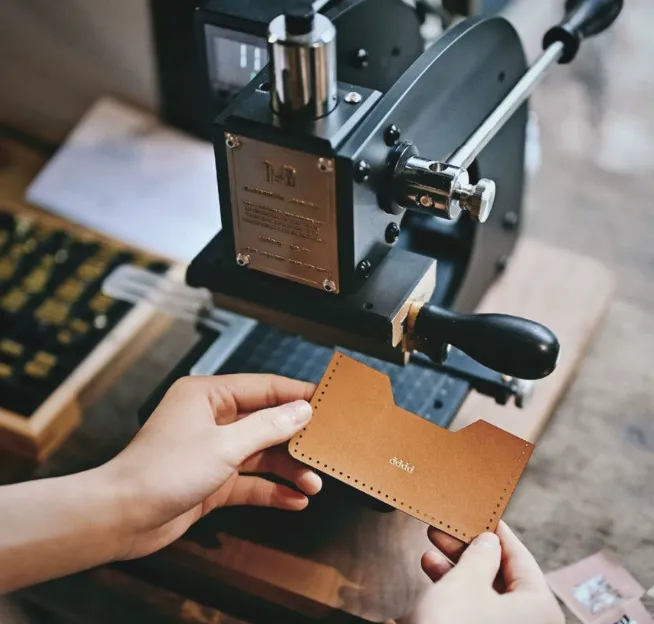
Craftsmanship in leather goods has always depended on precision, where even a slight variation can change the entire look and feel of the final product.
The growing use of stamping machine for leather reflects a shift towards controlled, repeatable detailing, especially in industries where consistency matters as much as creativity.
This article explores how modern tools and traditional techniques come together, offering reliable solutions for both decorative and functional printing needs across different materials.
Understanding Leather Stamping Technology
Leather stamping has evolved from manual tools to advanced machinery that ensures uniform pressure and depth. This transition has improved both speed and accuracy in production.
A stamping machine for leather allows artisans and manufacturers to imprint designs, logos, or textures with consistent results. It reduces human error and supports large-scale production without sacrificing quality. This makes it particularly useful for businesses aiming to maintain a professional finish across every product unit.
Benefits of Using Modern Stamping Equipment
Modern stamping equipment offers a range of advantages that go beyond simple design application. It enhances workflow efficiency while maintaining high standards of craftsmanship.
Key benefits include:
- Consistent pressure for uniform impressions
- Reduced manual effort and operator fatigue
- Faster production cycles for bulk orders
- Ability to handle different leather thicknesses
These features make it easier to meet both creative and commercial demands without compromising on detail or durability.
Applications in Leather Product Manufacturing
Stamped leather designs are widely seen in wallets, belts, handbags, and customised accessories. Precision tools help ensure that each piece carries the same level of detail, regardless of production volume.
This consistency is essential for branding, especially when logos or patterns must appear identical across multiple items. With the support of advanced stamping systems, manufacturers can achieve both aesthetic appeal and structural integrity, ensuring products remain visually appealing over time.
Introduction to Traditional Print Plate Techniques
Alongside leather stamping, Letterpress Plates continue to hold value in the world of printing. Known for their ability to create deep, tactile impressions, they offer a distinct finish that modern digital methods often cannot replicate.
These plates are typically used in press systems where inked surfaces are transferred onto paper or similar materials. The result is a crisp, textured print that reflects both precision and craftsmanship.
Advantages of Letterpress Printing Methods
Letterpress techniques bring a unique character to printed materials. Their ability to create depth and texture makes them highly desirable for premium print applications.
Key advantages include:
- Distinct tactile impression on surfaces
- High durability of print plates
- Excellent ink control for sharp details
- Timeless aesthetic appeal
These qualities make letterpress a preferred choice for projects where presentation and quality are equally important.
Common Uses in Premium Print Design
Letterpress plates are widely used in creating business cards, wedding invitations, packaging inserts, and artistic prints. Their textured finish adds a sense of authenticity that stands out in a digital-heavy market.
Designers often choose this method when they want to convey sophistication and attention to detail. It is especially effective for minimalistic designs, where the impression itself becomes a central visual element rather than relying on complex graphics.
Selecting the Right Technique for Your Project
Choosing between stamping and letterpress depends on the material and desired outcome. Leather requires pressure-based imprinting, while paper-based designs benefit from plate-driven printing techniques.
In some cases, both methods may complement each other, particularly in branding projects that involve both packaging and product design. Understanding the strengths of each approach ensures better results and more efficient production planning.
Final Thoughts on Precision Craft and Print
Both leather stamping systems and traditional plate printing offer valuable solutions for modern production needs. One focuses on material impression, while the other enhances printed surfaces with texture and clarity.
Understanding how stamping machines for leather improve consistency, alongside how letterpress plate methods create refined printed results, allows for better project decisions.
With the right combination of technique and purpose, it becomes easier to achieve outcomes that reflect both quality and thoughtful design. Consider these methods carefully when planning your next creative or production task.